
A Sleep Doctors Personal Sleep Story
What's Your Sleep Story?

A couple nights ago I slept 10 uninterrupted, glorious hours, and felt aaah-mazing the entire next day!
One thing I love about sleep is that it’s universal, a great unifier, and everybody has their own personal experience. Whenever I’m out and about socializing, and my work in sleep health comes up, people share their personal sleep stories which are always so interesting and I love to hear.
Many physicians and ‘sleep coaches’ enter the field after having their own struggles. My experience has actually been the opposite. I have almost always slept well, with the exception of a few stressful times. Sleep health has been my calling since my teens, so I’ve always prioritized it. Being habitually well-rested has given me deep insight into how healthy sleep fuels our days in all the ways – energy, cognitive function, emotional regulation, creativity, problem-solving, health habits, even happiness and joy.
So I’ve rarely shared my sleep story, as it’s not necessarily a story of success after overcoming challenges, but more a story of success from long-term prioritizing. Today I’d like to share my personal sleep story, and open the door to hearing yours.
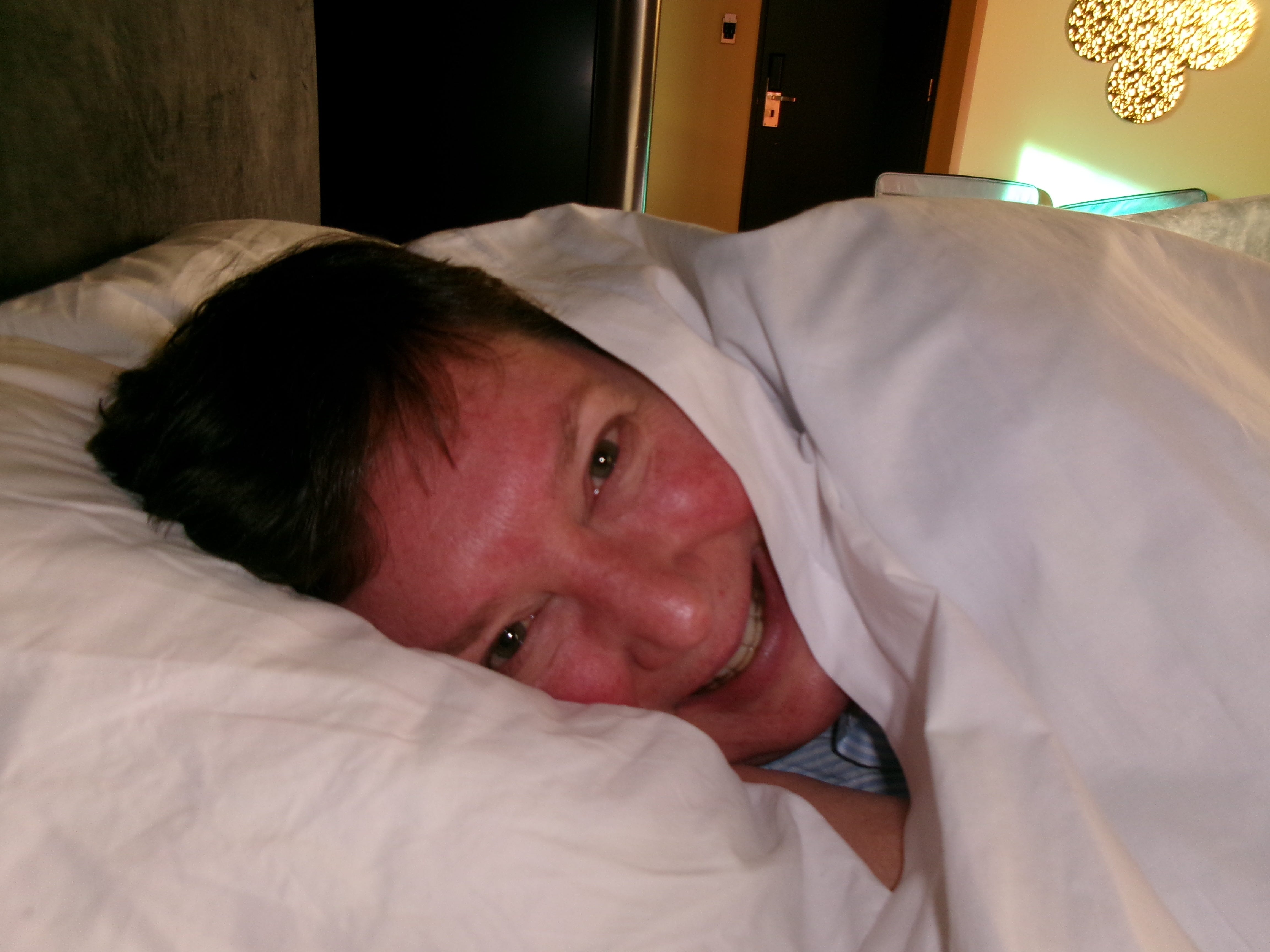
My Sleep Challenges
During several life seasons my sleep has been disrupted by outside factors. Many of those times were actually due to parenting. One of the biggest challenges for parents is being on hand for a child whose sleep is different than their own. Of course, this is developmentally appropriate, the child can’t sleep in an adult manner, which doesn’t fit their developmental stage.
After giving birth to my daughter, I’d get up repeatedly to care for her, as parents do. Even though we co-slept, with her in a “side-car” at the bedside, those interruptions still took their toll. After months I was just exhausted from the interrupted sleep. Then her father cared for her in the night on the weekend so I could get uninterrupted sleep. This was a godsend, and made all the difference on those days. This is a pattern I’ve seen in my practice too. Often in women who are breastfeeding, and have been doing the night shift parenting for years. If this is you, consider planning for another adult to do the nightcare on a regular basis if possible, so mom can get some uninterrupted sleep.
When my daughter was a teenager was another period of disrupted sleep. She’d be up late, and it seemed like 10pm was when she most wanted to hang out and tell me everything. I’ve always been more of a morning person, so this was a tough time of day to be ‘on.’ For us morning types, staying up late will often mean a night of insufficient sleep, as our circadian clock still wakes us early. In this case, being up late with my daughter was worth it, though my sleep paid the price.
When I was injured by a drunk driver, pain interrupted my sleep for several years. Although I was tired enough at bedtime to fall asleep, as my sleep drive was discharged, later in the night the pain would break through. Unfortunately, about 20% of Americans deal with chronic pain. That pain disrupts sleep, and poor sleep increases pain, so it becomes a negative feedback cycle. If this is you, I encourage you to keep going to find pain management solutions, and strategies to strengthen your sleep and circadian rhythm so they can better withstand pain. It’s a tough place to be, and I hope to write more about pain and sleep in future.
The other challenge for my sleep is stressful life events. When my husband did military service in Afghanistan, I was worried for his safety and did not sleep well. One thing that helped is the nightly journalling practice I’ve shared with you in the past, find it here. For some people, this is a practice they need to do every night, for others it’s a strategy to use as needed. Personally, I use this approach just when needed (though I do other journaling routinely).
Lately, since January, we’ve had big changes here – moved from a beloved home, daughter graduated from college (which somehow felt like a bigger milestone than highschool), lost our 18 yo cat Thompson, and more. For several months I’d wake up after about 6 hours, knowing I hadn’t got enough rest, but unable to get back to sleep. Even at those early hours, my brain would be ON- thinking things through, problem solving, and making plans. Although being under-slept made it more difficult to be cheerful and think well, I took it in stride, knowing that of course my sleep would be affected by this level of change. I’d get out of bed, and ease into my day by reading on the sofa until it was time to start the day. Sleep is one of the few areas where often the harder you try, the worse you do. Absolutely get out of bed if you sense you won’t be returning to sleep, there’s no way to force it.
This week things have finally settled down, I can feel my nervous system unwinding, and it’s been a blessing to sleep well again. After Sunday night of 10 hours, I’ve been getting a solid eight, and feel so much better than the last months with just 6. Today when the alarm went off after 8 hours, I was sleeping pretty deeply. So for now, I’ll schedule 8.5 hours in bed, which is a bit more than I typically need. As I become more rested, I’ll likely start waking before the alarm, and go back to waking at a routine time without one.
What Goes Well
I’m big on designing our environment to support success, and apply that approach to sleep. One of the best compliments I ever got was from a friend who came over for a dinner party. After putting her coat on the bed, she said “this is the best, most relaxing, bedroom I’ve ever seen.” My bedroom is a sleep oasis – completely dark for sleep, with dim, uptilted, lamps for evening. The bed is big enough, and the ‘just right’ firmness. Sheets are soft. It’s clean so minimal dust mites or allergens, and uncluttered so there’s nothing to trigger thoughts of projects or the ‘to do’ list. The phone is outside the bedroom, and I use a simple battery powered travel alarm clock so it doesn’t glow like so many clocks do.
The environmental design extends beyond the bedroom. We’ve talked before about setting the stage for sleep a couple hours before bed. The common rooms all have “quiet time” light options which we switch to about 1.5-2 hours before bed. My blue blockers live on the sofa end-table so they’re in sight and easy to remember. The thermostat is programmed to cool off the house at that time too.
The other area that impacts sleep immensely is our routine. Thankfully this is somewhat in our control, and with intention can get better. Every cell in our body has a clock. The purpose of these clocks is to help our cells know when to do their functions. When we entrain our clocks with a predictable routine, they are able to anticipate needs, and be ready to function as required. I’ve noticed over the years while working with patients, some people naturally seem to gravitate to a routine, while for others it’s more difficult. Fortunately, it’s relatively easy for me, and was modeled by my parents too when I was growing up. That may not be the case of you. Whenever there’s big changes it’s a struggle to hold onto routine. Right now I’m needing to re-implement a routine, so have written one out, and will even tape it on the desk next to my computer to get back on track.
What I’m Working on Now
There are a few things that I need to work on. For one, I suspect I might have sleep apnea. After menopause, the rate of sleep apnea in women approaches that in men. During some recent travel, my daughter said I snored loudly. And I know my mom likely has apnea. So, I’ll be getting an overnight sleep study to assess.
Getting the new routine in place will take some effort. Another strategy is to put the mealtimes, wind-down time, morning light, bed and wake times into the electronic calendar, which I may do. For now, bedtime is 9pm, since I’m consistently sleepy by then. To stabilize my sleep hours I’ll set the alarm for 5:30am, until I am waking on my own, feeling well-rested. Previously I’d wake after 7.5 hours consistently, so am interested to see how much sleep I do best with now. Having stable sleep patterns, with bed and wake time varying less than 30 mins, and total sleep varying less than an hour, is associated with better long-term health. Longer term, being on an early schedule interferes with socializing as much as I’d like to, so after the routine settles, I’d like to shift my schedule an hour later.
What’s Your Sleep Story?
I hope you found my sleep story interesting and inspiring. Tell me more about your sleep story . . .
- What challenges are you facing?
- What goes well?
- What next steps are you planning?
Sleep is truly universal, there’s not a single person, ever, who hasn’t needed nightly sleep. Please join in the conversation here on Substack, it’s an area where we can share our experiences and learn from each other.
Sleep well and dream big,
Dr. Catherine
Love that you focus on designing your environment to support success. This whole piece is quiet proof that sleep isn't a discipline problem. It's a design problem. The bedroom-as-oasis section could be its own essay. So many people spend money on trackers to measure the sleep the room is actively sabotaging. Glad the calm has come back. 💚